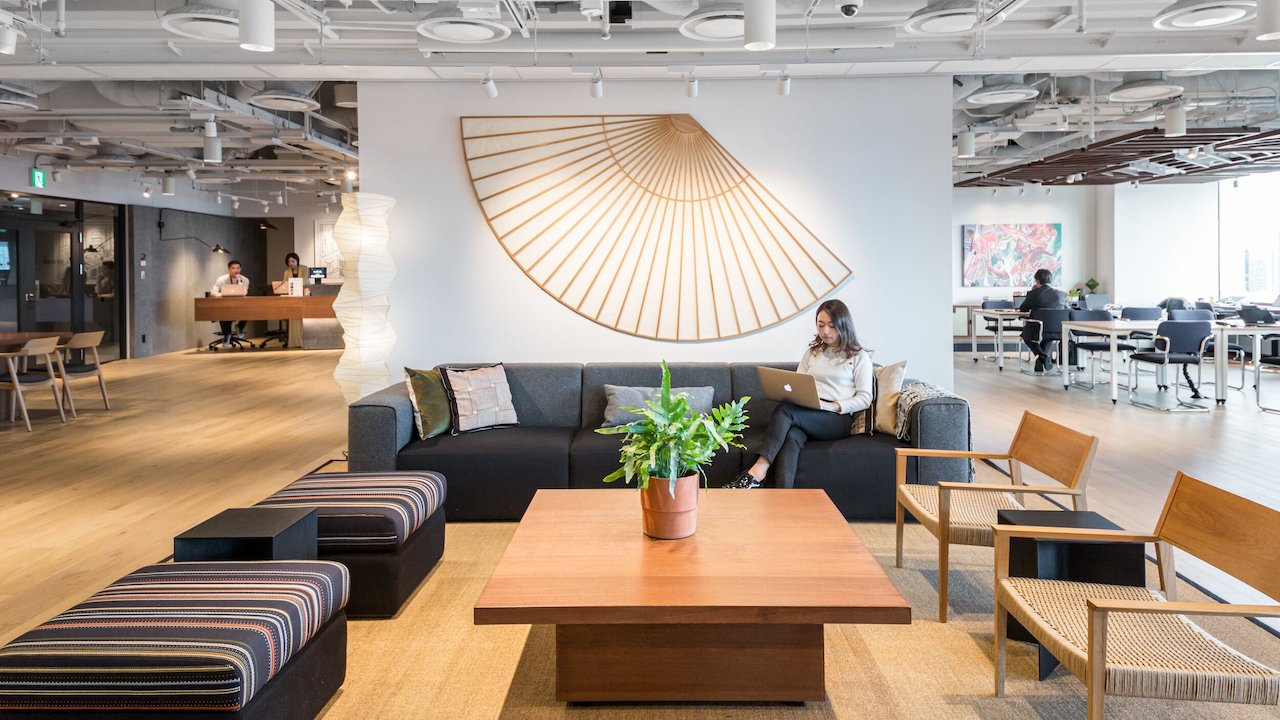
Cheap office space in Tokyo is less about hunting for a bargain building than about knowing which ward you are standing in. The gap between a Marunouchi tower and a comparable floor two stations out is wide enough that the ward you choose decides your budget long before the individual building does.
The C5 premium, and what sits outside it
Tokyo's office market is built around the five central wards — Chiyoda, Chuo, Minato, Shinjuku and Shibuya. They hold the head offices, the trading floors and the addresses clients recognise, and they are priced accordingly. Our Tokyo catalogue is concentrated there too: Minato alone carries 63 buildings and 419 listings, Chiyoda 40 buildings, Shibuya 26, Chuo 23 and Shinjuku 14.
The saving starts when you step one ring out. Toshima — Ikebukuro and its surroundings — carries 9 buildings and 62 listings, and Shinagawa 6 buildings with 41 listings. Both are on the Yamanote line, both put you inside the loop, and neither charges the Otemachi address premium. For a team that meets clients occasionally rather than daily, that trade is usually the single biggest lever on the rent.
Size is the other lever
The second saving is one tenants routinely leave on the table: taking more square metres than the team actually works in. Listings in our Tokyo catalogue run from 4 m² to 720 m², with a median of 27 m². A Tokyo floor plate is efficient by international standards — desks sit closer together and storage is built in — so a room that looks small on paper often seats the headcount comfortably.
Before you shortlist, count desks rather than staff. Hybrid schedules mean the peak-day number, not the payroll number, is what you are renting for.
Flexible space is where the entry point is
If the goal is the lowest committed monthly cost, the flexible end of the market is where to look. Across the city our catalogue lists 170 coworking options in 170 buildings, and entries start from ¥40,000 a month. That buys a desk rather than a room, but it comes with the meeting rooms, reception and internet already running, and without the deposit and restoration obligations that come with a conventional lease.
Operators are concentrated in the same central wards: WeWork holds 30 buildings in the Tokyo catalogue and Regus 18, so a flexible desk in Chiyoda or Minato is usually available even where whole-floor space is not.
What "cheap" costs you elsewhere
Two costs are easy to miss. The first is commuting: Japanese employers generally reimburse commuting fares, so a cheaper ward that adds a transfer for most of the team can quietly return the saving as a payroll line. The second is the deposit. Conventional Tokyo leases commonly ask for several months of rent as a security deposit, and part of it is not returned. A serviced or coworking contract avoids that outlay, which for a young company often matters more than the headline monthly figure.
How to compare
Filter on three axes and nothing else at first: ward, size band and monthly budget. The Tokyo office listings show photos, monthly price in yen and the nearest station with walking minutes on one screen, across 188 buildings and 1,251 listings, so the comparison is like for like. Narrow to a ward — Toshima or Shinagawa are the usual value picks — and shortlist from there.